
Guide
What a French Drain Costs in Chester County, PA
The variables that actually move French drain pricing in southeastern Pennsylvania — length, depth, outfall, access and restoration — and how to read a quote so you can compare two of them honestly.
French drain pricing varies more than most homeowners expect, and the variation is not arbitrary. Two quotes for "a French drain" on the same property can differ substantially and both be reasonable, because the term covers everything from a short interception run to a full perimeter system with a constructed outfall.
The range commonly cited for residential French drain work in this region is roughly $2,000 to $8,000, which is wide enough to be nearly useless on its own. What follows is what moves a project within that range, so a quote can be read rather than just compared on total.
JHL Drainage Solutions provides a free written estimate after an on-site assessment. We do not quote French drain work by the linear foot over the phone, because the variables below are not visible from a description.
Length is the obvious variable, and the least interesting one
Linear footage scales cost roughly linearly, and it is the number most homeowners focus on. It is also the one that varies least between competent quotes, because the run length required to intercept a given flow is largely determined by the site rather than by preference.
What matters more is whether the proposed length actually intercepts the water. A drain that stops short of the seepage line collects some of the flow and leaves the rest, which reads as a partial failure and is genuinely difficult to correct afterwards without redoing it.
Depth, and what is in the ground
Depth is driven by where the water is moving, not by a standard. A drain intercepting shallow seepage sits shallow; one relieving water at footing level sits deep. Cost rises with depth faster than proportionally, because deeper trenches mean more spoil to handle, more stone to backfill and, past a point, shoring.
Rock is the variable that genuinely surprises people, and parts of Chester County have it close to the surface. Hitting rock changes the equipment and the schedule. A quote given without anyone assessing the ground carries that risk somewhere — either in a contingency built into the price or in a change order later.
Existing utilities matter for the same reason. Irrigation lines, invisible fencing, gas and electric service runs and septic components all have to be located before excavation, and working around them is slower than working without them.
The outfall is where quotes diverge most
Every French drain has to discharge somewhere, and this is the single largest source of legitimate price difference between two quotes on the same property.
A site with natural fall to a point where water can be released harmlessly gets a simple daylight outfall — a straightforward, inexpensive termination. A site without that fall needs something constructed: a dry well sized for the contributing area, a pumped discharge, or a longer carrier line to reach an acceptable release point. Those are materially different pieces of work.
This is the part of a quote worth reading closely. If a quote does not say where the water goes, that is the question to ask before comparing totals — because a cheaper quote with no defined outfall is not cheaper, it is incomplete.
Access and restoration
Whether a machine can reach the work area changes the labour figure substantially. A back yard reachable only through a narrow gate, or across a finished patio, or on a slope too steep to work safely, may have to be dug largely by hand.
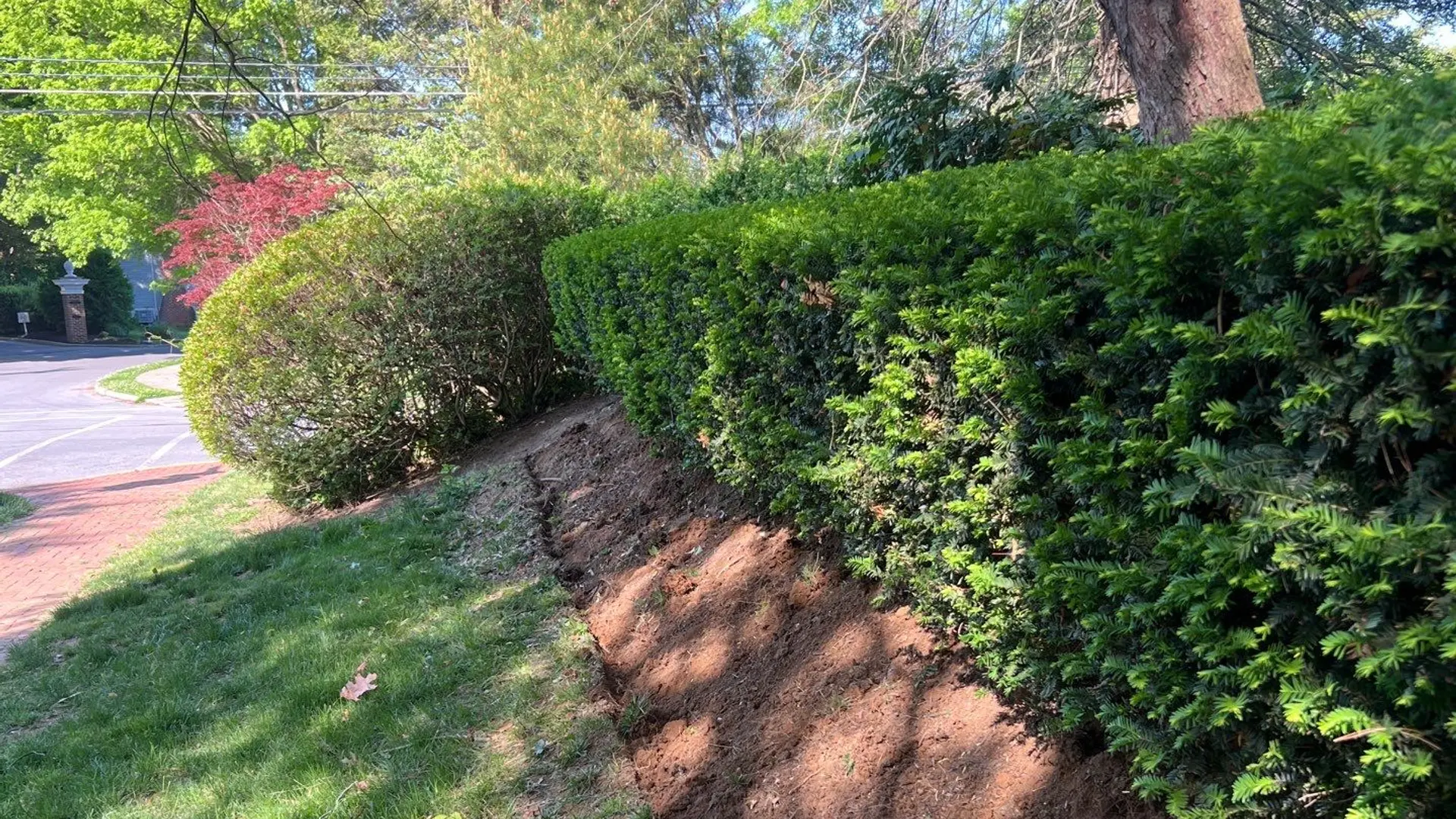
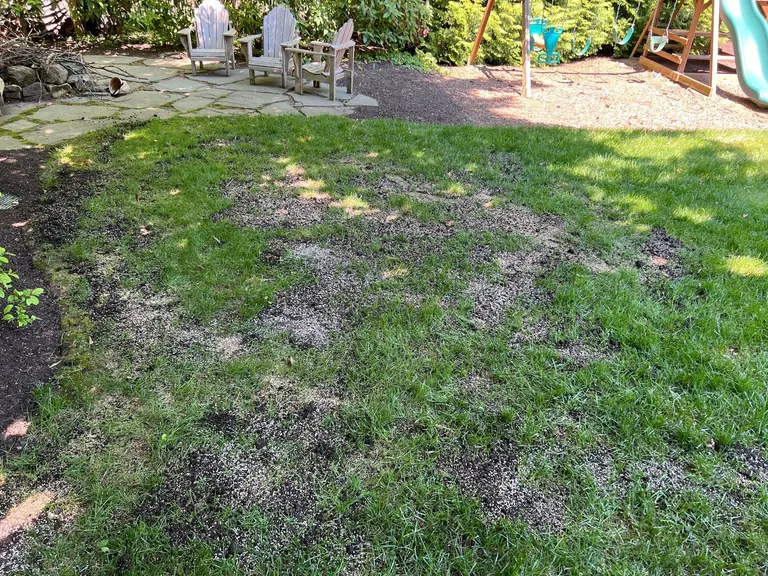
Restoration is the other commonly under-scoped line. Trenching across an established lawn leaves a scar, and putting it back properly — topsoil, seed or sod, and the follow-up needed for it to take — is real work. Restoration across hardscape, mature planting beds or a driveway is a different order of cost again. A quote that omits restoration is quoting a different job from one that includes it.
What separates a system that lasts from one that silts up
Two components account for most premature French drain failure, and neither is expensive relative to the job: filter fabric and washed stone.
Fabric keeps soil fines out of the stone envelope. Without it, silt migrates in and the void space that makes the system work fills progressively. The drain does not fail immediately — it degrades over a few years, which makes the cause hard to attribute after the fact.
Washed stone matters for the same reason. Unwashed aggregate carries its own fines and begins partially clogged. Both are the sort of specification that is easy to leave out of a quote and invisible once the trench is closed, which is precisely why it is worth asking whether they are included.
Questions
Common questions
How much does a French drain cost in Chester County, PA?
Residential French drain work in this region commonly falls in the $2,000 to $8,000 range, but the position within that range depends on run length, depth, ground conditions, what the outfall requires and how much restoration the site needs. We provide a free written estimate after assessing the property rather than quoting per linear foot in advance.
Why are two French drain quotes for my property so different?
Most often the outfall, the depth, or restoration. A quote that terminates the drain at a natural daylight point is cheaper than one that has to construct a dry well or run a long carrier line, and a quote that excludes lawn restoration is cheaper than one that includes it. Compare what each quote says about where the water goes and what the site looks like afterwards, not just the total.
Is a French drain cheaper than regrading?
Usually not. Where the actual problem is surface water running toward the house, regrading is generally both the cheaper and the more durable correction. French drains address water moving through the ground, which is a different condition. Being told you need the more expensive of the two without a diagnosis is worth questioning.
Do I need a permit for a French drain in Chester County?
It depends on the municipality and on what the work involves. Requirements are set at township and borough level rather than county-wide, and work affecting a stormwater system, a floodplain or a regulated earth disturbance threshold is treated differently from a short interception run. We confirm what applies to your specific address before work begins.
Related
Keep reading
Find the cause before you pay for a fix.
On-site assessment. Free written estimate. No obligation.