
Our standard
How We Diagnose a Drainage Problem
Installing the right system for the wrong problem is the most expensive mistake in residential drainage. This is the sequence we work through before anything is quoted.
Step one
Watch the property during rain, not after it
Standing water shows you where water ends up. It tells you very little about where it came from, and the route is what determines the correction.
Where water first appears, where it travels and where it stops identifies the cause far more reliably than the puddle left behind once the rain stops. Where we cannot be on site during rain, we look for the evidence it leaves: erosion lines, silt deposits, moss, settlement at downspout corners and the shape of the ground itself.
Step two
Separate the six causes
Almost every residential drainage complaint in this region resolves to one of six conditions, and several frequently occur together.
Negative grade at the structure
The ground within the first several feet falls back toward the house. Foundation backfill settles for years after construction, so a grade that was correct at handover is frequently negative decades later.
Roof water released at the foundation
A splash block puts the roof's entire share of a storm into the backfill zone. On clay it does not disperse — it saturates the loosest ground on the property, directly against the wall.
A low point with no outfall
A genuine depression that collects water and has nowhere lower to send it. The question that matters is whether an outfall exists at all, because that decides what is buildable.
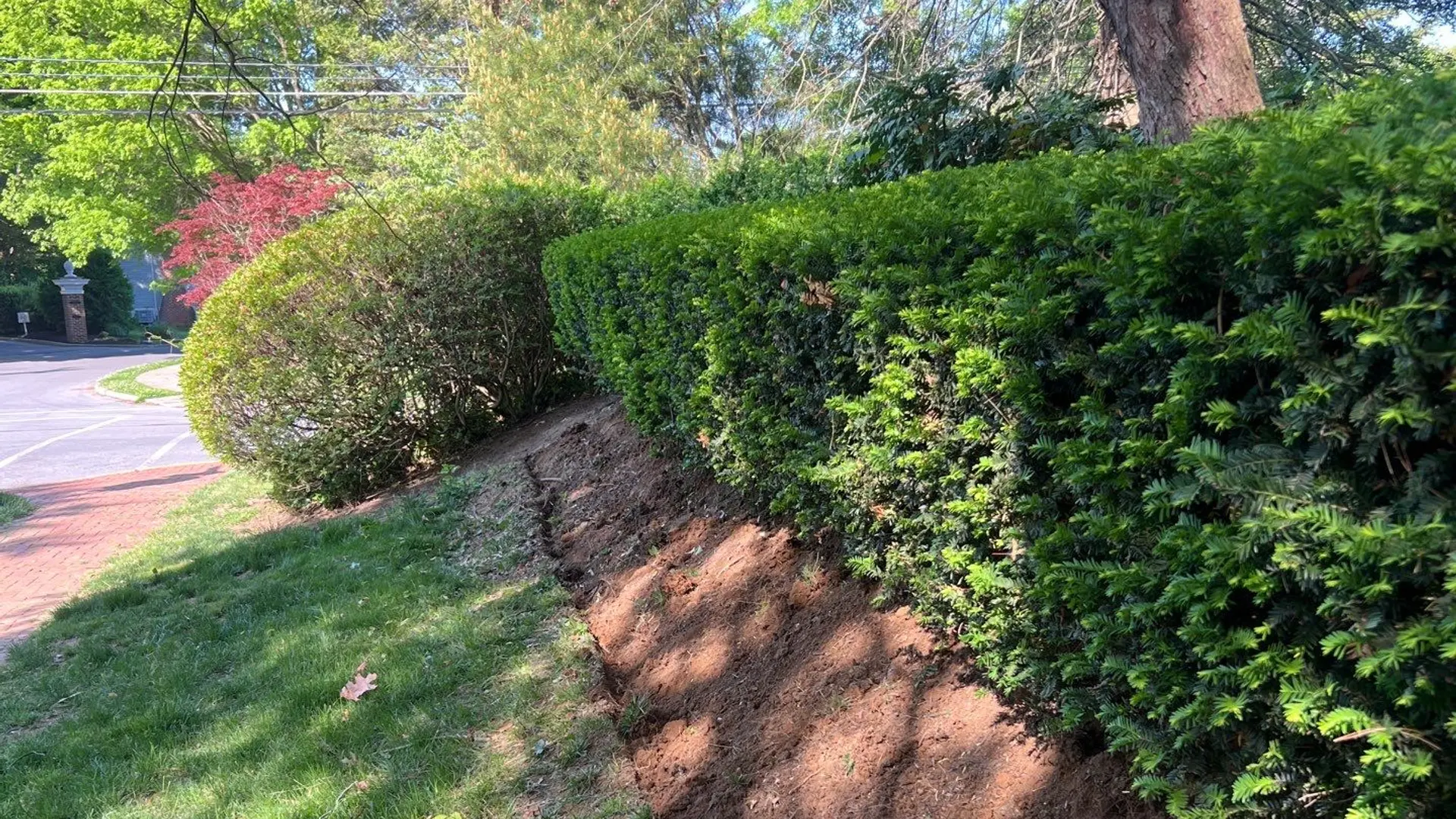
Subsurface water surfacing on a slope
Water moving along the top of the clay layer, emerging partway down a slope as ground that stays soft without rain to explain it. This is the genuine French drain condition.
Runoff arriving from upslope
The water is not yours. A system sized for the lot alone will be overwhelmed by the lot plus a share of the one above it, and correcting that after installation is expensive.
Compacted soil that will not accept water
Common on newer construction, where equipment left compacted subsoil under a thin topsoil layer. Piping does not fix soil that cannot absorb; decompaction and amendment does.
Step three
Establish the outfall before designing anything
Every gravity system has to discharge somewhere genuinely lower than where it collects. On a sloping property that is straightforward; on a flat lot it is the entire design problem.
Where there is no natural fall, the legitimate options are a dry well sized for the contributing area, a pumped discharge, or a longer carrier line to reach a usable release point. What does not exist is a gravity drain to a point that is not downhill.
This is also where quotes for the same property diverge most, so we state the outfall in writing. If another quote does not say where the water goes, that is the question worth asking before comparing totals.
Step four
Specify the parts that are invisible afterwards
Two components account for most premature French drain failure, and neither is expensive relative to the job: filter fabric and genuinely washed stone.
Fabric keeps soil fines out of the stone envelope. Without it, silt migrates in and the void space that makes the system work fills progressively — the drain degrades over a few years rather than failing outright, which makes the cause very hard to attribute after the fact.
Washed stone matters for the same reason: unwashed aggregate carries its own fines and begins partially clogged. Both are easy to leave out of a quote and impossible to inspect once the trench is closed, which is precisely why they are worth asking about.
The same logic applies to carrier lines: solid rather than perforated pipe, rigid smooth-wall rather than corrugated, and consistent fall with no sag that can hold water and freeze.
Step five
Say what the restoration will be
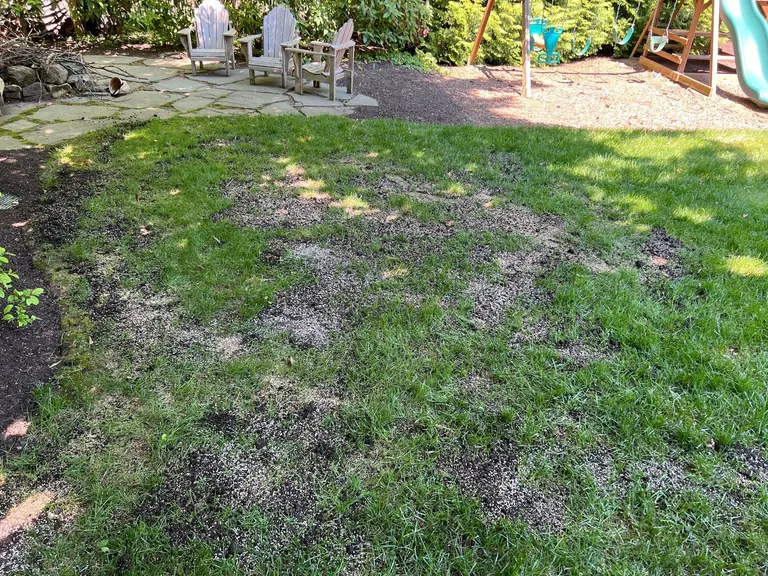
Trenching across an established lawn leaves a scar, and putting it back properly is real work: topsoil, seed or sod, and the follow-up needed for it to establish. Across hardscape or mature planting it is a different order of cost again.
A quote that omits restoration is quoting a different job from one that includes it. Ours states it, including where cold ground means seeding has to wait until spring.
Find the cause before you pay for a fix.
On-site assessment. Free written estimate. No obligation.