
Drainage service
French Drain Installation
Subsurface French drain systems that intercept groundwater and carry it away from the house before it reaches the foundation.
Overview
French Drain Installation in southeastern Pennsylvania
A French drain intercepts water that is already moving through the ground. That is a narrower job than the term's popularity suggests, and it is why the diagnosis matters: a French drain installed to solve a surface-water problem addresses the wrong condition and disappoints.
Where it is the right system — water moving laterally along the clay layer and surfacing partway down a slope, or pressure against a foundation wall — a correctly built French drain is a permanent correction with no moving parts.
System components
Perforated pipe / Washed stone / Filter fabric / Solid outfall pipe
What a correctly built French drain contains
The components are unglamorous and the details are where systems succeed or fail. Perforated pipe sized for the expected flow, laid holes-down so water enters from the stone envelope at the lowest point. A washed stone envelope providing void space for water to move through faster than it moves through soil. Filter fabric separating that stone from the surrounding soil so silt cannot fill the voids. And a consistent fall along the whole run to an outfall.
Two of those are routinely omitted because they are invisible once the trench is closed: filter fabric and genuinely washed stone. A system built without them works for a season or two and then silts up progressively, which makes the cause difficult to attribute years later.
The outfall problem
Every French drain has to discharge somewhere lower than itself. On a sloping property that is straightforward. On a flat lot it is the entire design problem, and it is where honest and dishonest proposals diverge.
Where there is no natural fall, the legitimate options are a dry well sized for the contributing area, a pumped discharge, or extending the carrier line far enough to reach a usable release point. What does not exist is a gravity drain to a point that is not lower than the drain.
Questions
French Drain Installation questions
How long does a French drain last?
A system built with filter fabric, washed stone and a maintained outfall can function for decades, because it has no moving parts. Systems that fail early almost always fail for one of three reasons: no fabric, unwashed aggregate, or an outfall that has become blocked or buried.
How deep does a French drain need to be?
It is set by where the water is moving, not by a standard depth. Shallow seepage is intercepted shallow; water relieving pressure at footing level sits deep. Depth drives cost more than proportionally, so it is worth establishing rather than assuming.
Can a French drain be installed under an existing lawn?
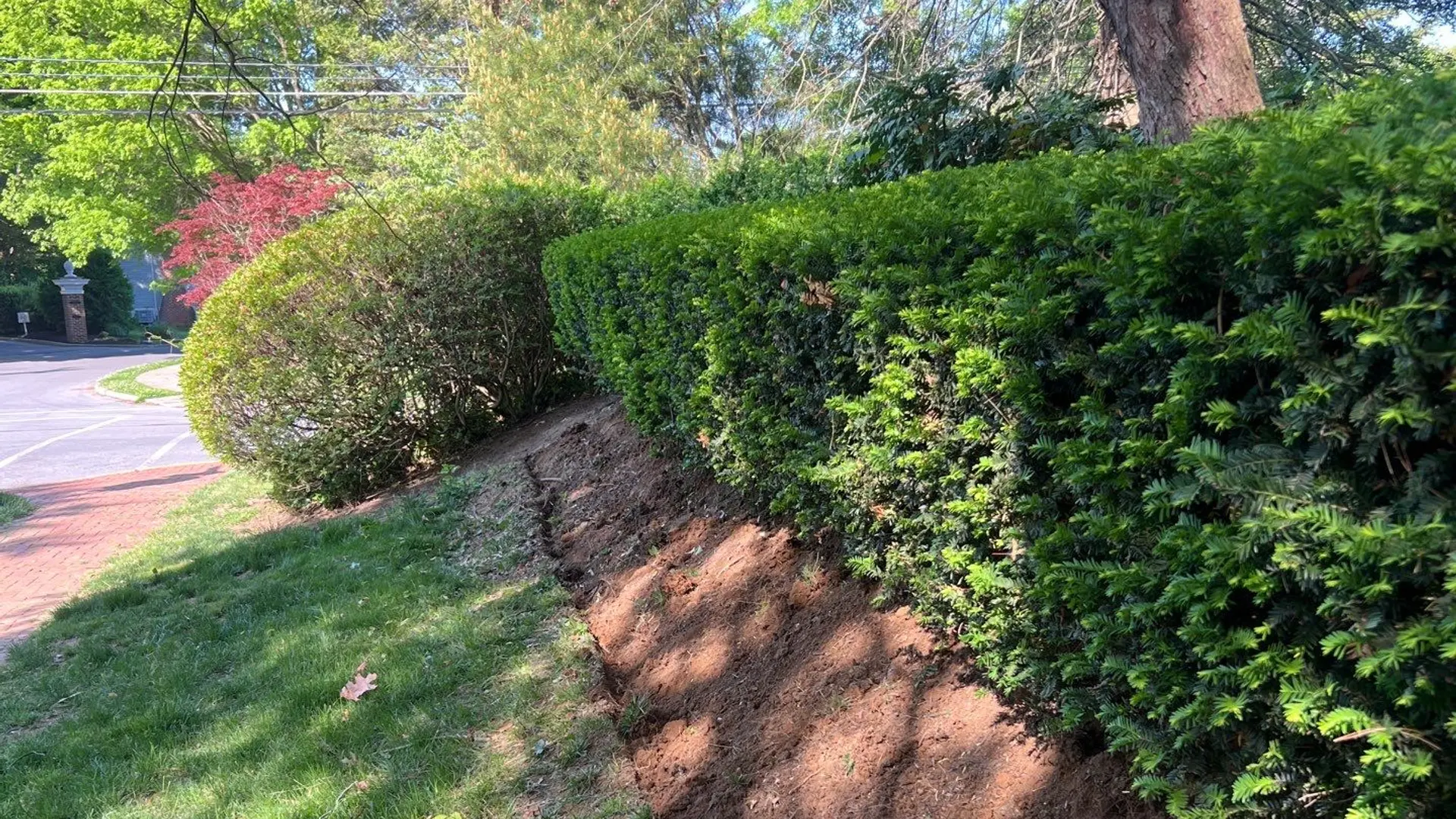
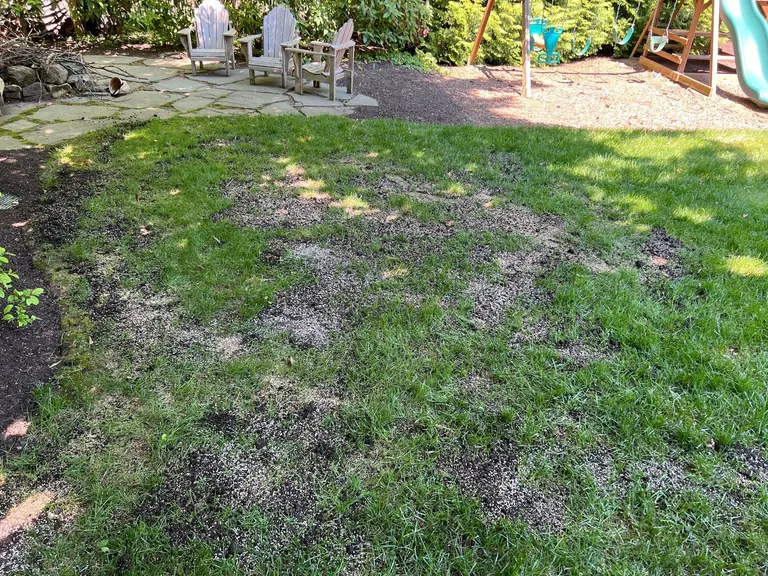
Yes, and most residential runs are. Trenching leaves a scar that needs topsoil and seed or sod to recover, and the restoration is a real part of the job — it is worth confirming it is included in any estimate you are comparing.
By town
French Drains by town
Each page covers how this system behaves on that town's ground.
- French Drains in Bryn Mawr, PA
- French Drains in Downingtown, PA
- French Drains in Exton, PA
- French Drains in Havertown, PA
- French Drains in Malvern, PA
- French Drains in Media, PA
- French Drains in Newtown Square, PA
- French Drains in Paoli, PA
- French Drains in Springfield, PA
- French Drains in Villanova, PA
- French Drains in Wayne, PA
- French Drains in West Chester, PA
- French Drains in Chadds Ford, PA
- French Drains in Swarthmore, PA
- French Drains in Chester Heights, PA
- French Drains in Nether Providence, PA
- French Drains in Glen Mills, PA
- French Drains in Narberth, PA
- French Drains in Garnet Valley, PA
Need french drains?
On-site assessment. Free written estimate. No obligation.