
Drainage service
Yard Drainage Systems
Catch basins, area drains and collection lines for chronically wet lawns, low spots and soggy ground that never dries out.
Overview
Yard Drainage Systems in southeastern Pennsylvania
Yard drainage is the collection-and-carry tier: for lawns with genuine low areas, chronically soft ground or water that arrives faster than the soil can take it.
The design question is always the same and always worth asking early: where is this water going to be released, and is that point genuinely lower than where it is collected.
System components
Catch basins / Area drains / Collection piping / Pop-up emitters
Catch basins, area drains and where they belong
A catch basin sits at a low point and collects water with a sediment sump beneath the outlet, so silt drops out rather than travelling into the line. An area drain is a simpler inlet for smaller volumes. Both are only as good as their placement — set at the point where water actually collects, which is determined by watching the property during rain rather than by looking at it afterwards.
The carrier line between them and the outfall should be solid rather than perforated. Perforated pipe in a collection line leaks its contents back into the ground partway along the run, which recreates the original problem somewhere less visible.
When a yard system is the wrong answer
If the ground is level, correctly graded and still holding water, the problem may be compaction rather than routing — subsoil that will not accept water, frequently left by construction equipment under a thin topsoil layer. Piping addresses nothing in that case; soil decompaction and amendment does.
Equally, if water is arriving from an upslope property, a system sized for the lot alone will be overwhelmed. Establishing the contributing area is part of sizing the system.
Questions
Yard Drainage Systems questions
What is the difference between a yard drain and a French drain?
A yard drainage system collects water at the surface through basins and inlets and carries it away in solid pipe. A French drain intercepts water moving through the ground using perforated pipe in a stone envelope. Different conditions, different systems — and installing one for the other is the most common expensive mistake in residential drainage.
Will a dry well solve standing water?
Where there is no lower outfall available, a dry well sized for the contributing area is a legitimate solution. It has to be sized for the volume actually reaching it and placed in ground that will accept that volume — on tight clay with a large contributing area, a dry well can fill faster than it empties and simply relocate the problem.
How long does yard drainage installation take?
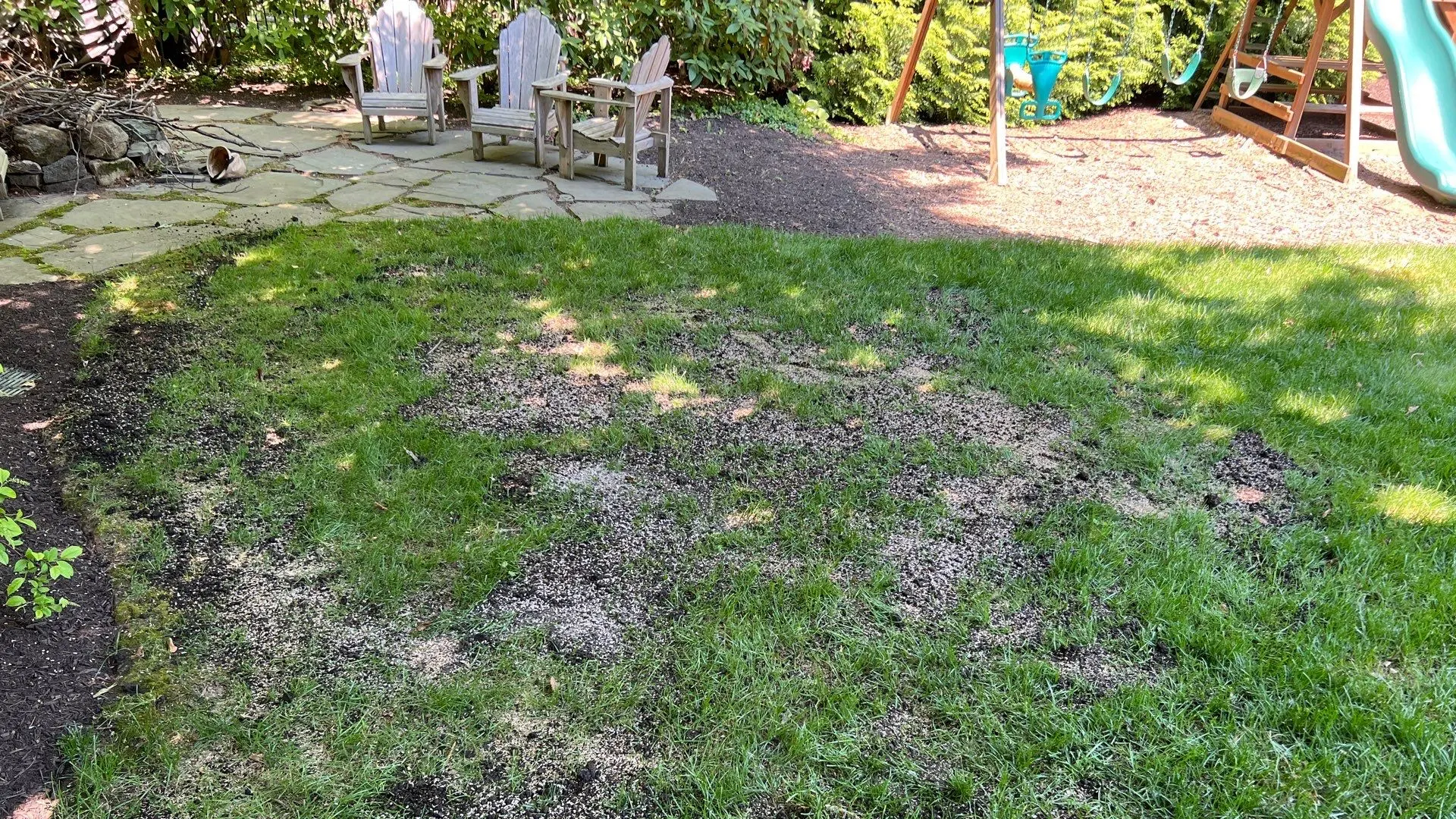
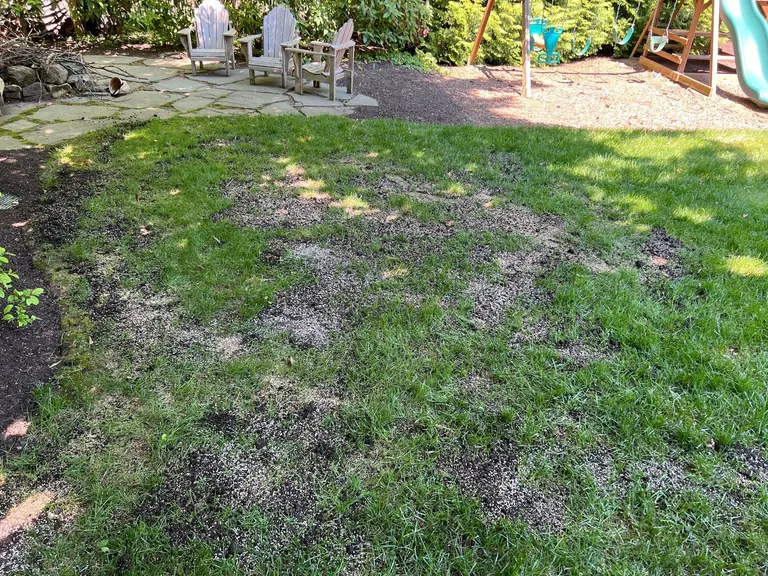
Most residential systems are one to three days of on-site work depending on run length, access and how much hardscape is involved. Lawn restoration follows, and in cold months seeding is staged for spring.
By town
Yard Drainage by town
Each page covers how this system behaves on that town's ground.
- Yard Drainage in Bryn Mawr, PA
- Yard Drainage in Downingtown, PA
- Yard Drainage in Exton, PA
- Yard Drainage in Havertown, PA
- Yard Drainage in Media, PA
- Yard Drainage in Newtown Square, PA
- Yard Drainage in Paoli, PA
- Yard Drainage in Springfield, PA
- Yard Drainage in Villanova, PA
- Yard Drainage in Wayne, PA
- Yard Drainage in West Chester, PA
- Yard Drainage in Chadds Ford, PA
- Yard Drainage in Swarthmore, PA
- Yard Drainage in Chester Heights, PA
- Yard Drainage in Nether Providence, PA
- Yard Drainage in Glen Mills, PA
Need yard drainage?
On-site assessment. Free written estimate. No obligation.